






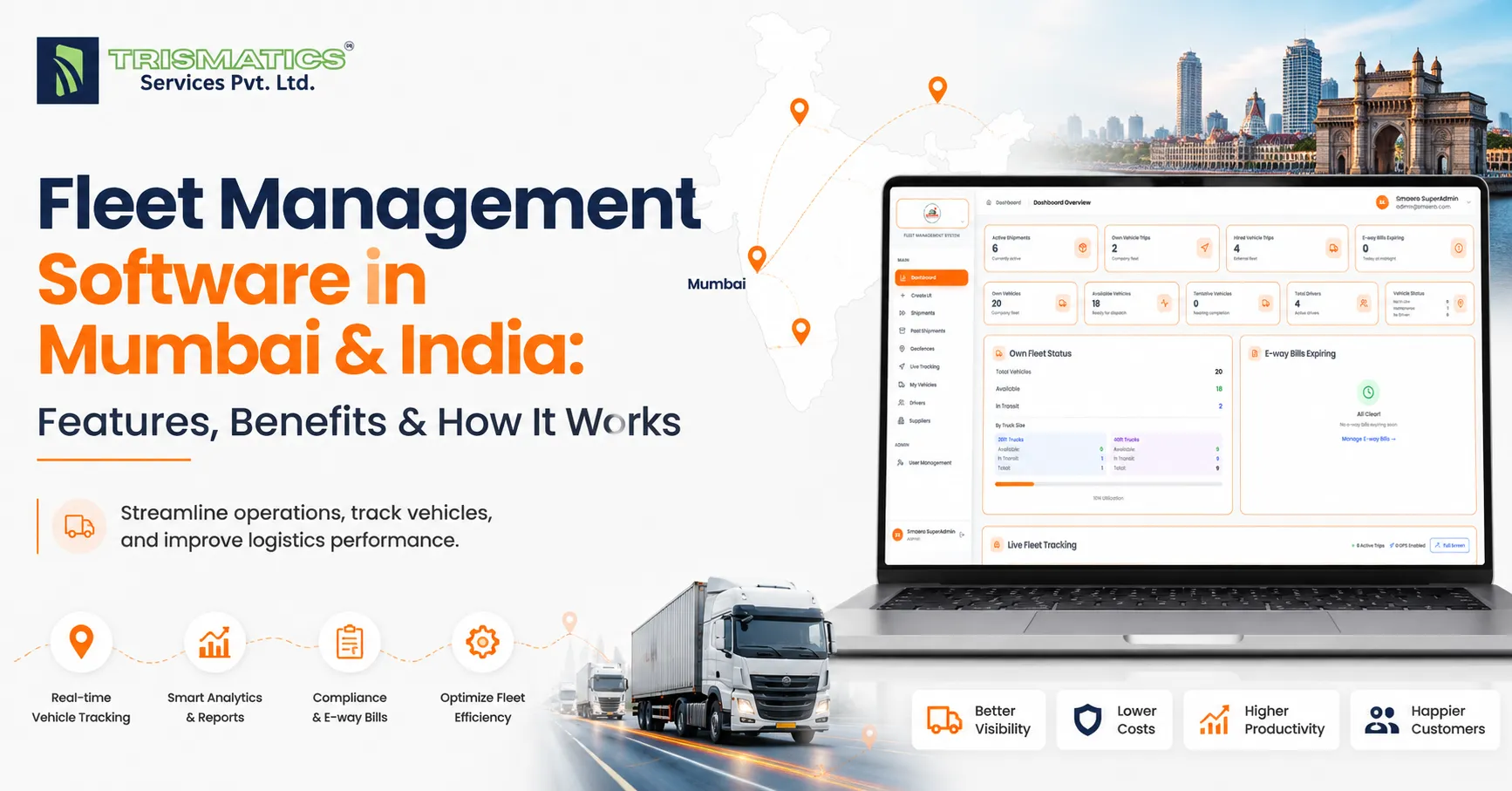
Managing a fleet of vehicles efficiently is becoming increasingly important for businesses across Mumbai and India. Whether a company operates delivery vehicles, commercial trucks, service vehicles, transport fleets, or logistics vehicles, keeping track of vehicles, drivers, fuel consumption, routes, maintenance, and daily operations can become challenging as the fleet grows.
Mumbai, being one of India’s busiest commercial and transportation hubs, presents unique challenges for fleet operators. Heavy traffic, long travel distances, rising fuel expenses, delivery deadlines, vehicle maintenance requirements, and unpredictable route conditions can directly affect operational efficiency and profitability.
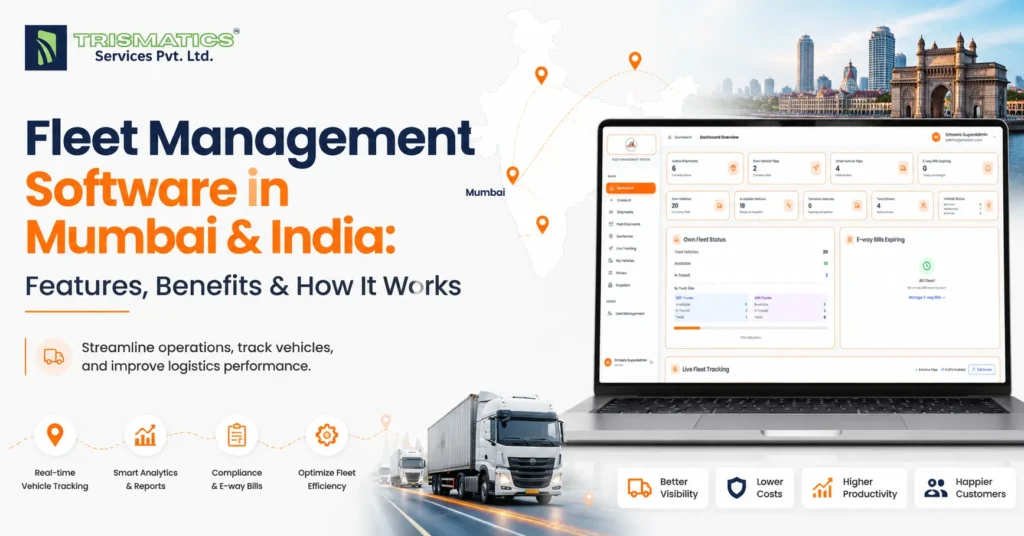
This is where Fleet Management Software in Mumbai & India can make a significant difference. Modern fleet management technology enables businesses to monitor vehicles in real time, optimize routes, manage fuel consumption, improve driver safety, automate reports, and gain better visibility into their transportation operations.
By replacing manual processes with centralized digital systems, businesses can make faster decisions, reduce unnecessary expenses, improve vehicle utilization, and deliver better customer experiences.
What Is Fleet Management Software?
Fleet Management Software is a digital solution designed to help businesses manage, monitor, and optimize their vehicle fleets from a centralized platform. It brings important fleet-related information together, allowing fleet managers to monitor vehicles, drivers, trips, fuel consumption, maintenance, routes, and operational performance.
Instead of depending on phone calls, spreadsheets, paper records, or manual tracking, businesses can use a centralized dashboard to access important information about their fleet.
A modern fleet management system can combine GPS tracking, vehicle data, driver information, alerts, analytics, and automated reporting to provide better control over transportation operations.
For businesses searching for Fleet Management Software in Mumbai & India, the goal is not simply to track vehicle locations. A complete solution can help businesses improve the overall efficiency of their fleet operations.
How Fleet Management Software Works
Fleet management software generally works by collecting information from vehicles and connected GPS or telematics devices and presenting that information through a centralized software platform.
The basic process includes:
1. Vehicle/GPS Data Collection:
GPS devices and connected systems collect information such as vehicle location, movement, trip details, and other relevant data.
2. Real-Time Monitoring:
The collected information is transmitted to the software, allowing fleet managers to monitor vehicles and trips in real time.
3. Centralized Dashboard:
Fleet managers can view vehicles, drivers, routes, trips, alerts, and other operational information through a centralized dashboard.
4. Alerts and Notifications:
The system can generate notifications for events such as route deviations, geofence activity, vehicle movement, or maintenance requirements.
5. Reports and Analytics:
Businesses can generate reports related to vehicles, trips, fuel, drivers, and overall fleet performance.
6. Automated Fleet Insights:
The software converts operational data into useful insights that can help businesses identify inefficiencies and make better decisions.
This combination of tracking, automation, and analytics makes fleet management software an important tool for modern transportation operations.
Why Do Businesses in Mumbai & India Need Fleet Management Software?
Fleet operations can become difficult to manage when businesses have multiple vehicles operating across different locations. Mumbai’s traffic conditions and India’s rapidly expanding logistics and transportation sector make visibility and operational control particularly important.
Businesses may face challenges such as:
- Heavy traffic congestion
- Increasing fuel costs
- Vehicle maintenance expenses
- Inefficient route planning
- Driver monitoring difficulties
- Delivery delays
- Manual record keeping
- Poor vehicle utilization
- Lack of real-time visibility
- Difficulty tracking operational performance
For example, a vehicle stuck in unexpected traffic can cause delivery delays, increase fuel consumption, and affect customer satisfaction. Without real-time visibility, fleet managers may not know about the issue until the driver or customer reports it.
With Fleet Management Software in Mumbai & India, businesses can gain real-time visibility into their vehicles and make faster operational decisions.
Route optimization can help identify more efficient routes, while GPS tracking can help managers understand where vehicles are located. Fuel management can provide better visibility into fuel usage, and maintenance features can help businesses plan servicing before unexpected breakdowns occur.
As a result, fleet management software can support businesses in improving productivity while controlling operational costs.
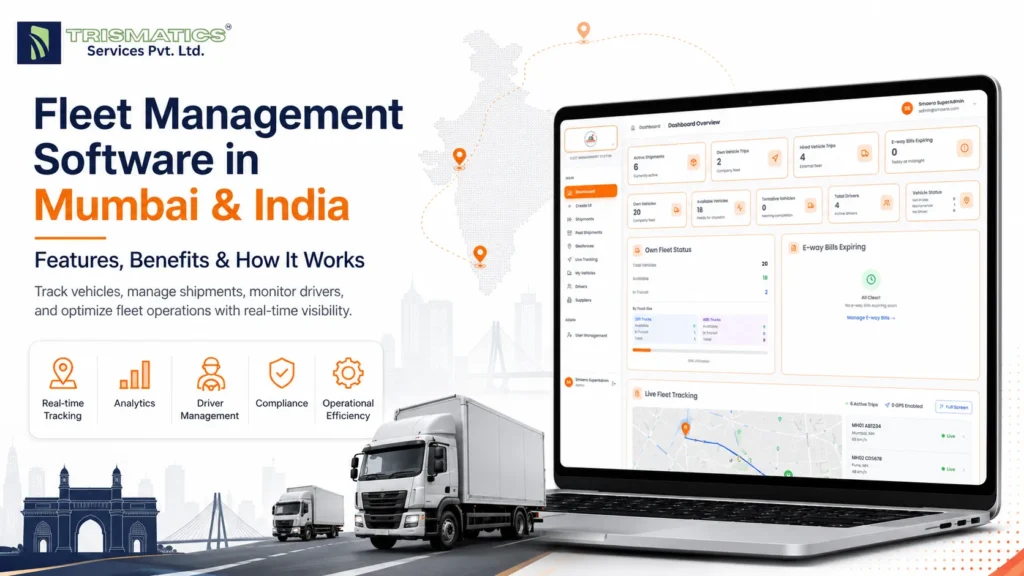
Key Features of Fleet Management Software
A comprehensive fleet management solution should provide features that address different aspects of fleet operations. Some of the most important features include the following.
Real-Time Vehicle Tracking
Real-time vehicle tracking allows businesses to monitor the current location and movement of vehicles.
Fleet managers can use a centralized dashboard to understand where vehicles are operating and monitor their movement during trips.
This can be particularly useful for logistics companies, delivery businesses, transportation providers, field service companies, and organizations managing commercial vehicles.
Real-time tracking can improve operational visibility and help businesses respond more quickly when unexpected situations occur.
GPS Fleet Tracking
GPS fleet tracking uses GPS technology to monitor vehicle locations and movement.
Businesses can use GPS-based tracking to understand vehicle routes, trip history, and movement patterns. This information can help fleet managers evaluate operational efficiency and identify potential route-related issues.
For businesses looking for Fleet Management Software in Mumbai & India, GPS tracking can be one of the most important capabilities because it provides visibility into fleet operations across different areas.
Route Optimization
Route optimization helps businesses identify efficient routes for their vehicles.
Instead of relying entirely on manually planned routes, businesses can use technology and operational data to plan journeys more effectively.
Better route planning can help businesses:
- Reduce unnecessary travel
- Minimize delays
- Improve vehicle utilization
- Reduce fuel consumption
- Improve delivery efficiency
- Handle multiple trips more effectively
For businesses operating in busy cities such as Mumbai, efficient route planning can play an important role in transportation productivity.
Smart Fuel Management
Fuel is one of the major operating expenses for many fleet-based businesses.
Smart fuel management helps businesses monitor fuel consumption and identify unusual or inefficient fuel usage.
Businesses can analyze fuel-related information to understand consumption patterns and identify areas where improvements may be possible.
Fuel management can help organizations work toward:
- Better fuel efficiency
- Reduced unnecessary fuel expenses
- Improved fuel monitoring
- Identification of unusual consumption
- Better operational planning
When combined with route optimization and vehicle monitoring, fuel management can contribute to better overall fleet cost control.
Driver Monitoring
Drivers play an important role in fleet performance and road safety.
Driver monitoring features can help businesses understand driving behavior and improve accountability.
Depending on the system and available vehicle data, businesses may monitor information related to driving patterns, trips, routes, and other operational indicators.
The objective is to encourage responsible driving, improve vehicle utilization, and support safer fleet operations.
Geofencing
Geofencing allows businesses to create virtual geographical boundaries around specific locations.
When a vehicle enters or exits a predefined area, the system can generate an alert.
For example, businesses can create geofences around:
- Warehouses
- Customer locations
- Offices
- Distribution centers
- Construction sites
- Delivery zones
Geofencing can help businesses monitor vehicle activity around important locations and improve operational control.
Alerts & Notifications
Fleet management software can provide automated alerts and notifications based on predefined conditions.
Common alerts may include:
- Vehicle movement alerts
- Geofence alerts
- Route deviation alerts
- Maintenance reminders
- Operational notifications
Automated notifications reduce the need for fleet managers to constantly monitor every vehicle manually.
Reports & Analytics
Data becomes more useful when businesses can analyze it effectively.
Fleet management software can provide reports related to:
- Vehicle performance
- Trip history
- Fuel consumption
- Driver activity
- Fleet utilization
- Operational performance
Analytics can help fleet managers identify patterns, compare performance, and make data-driven decisions.
Instead of simply collecting fleet information, businesses can use that information to identify areas for improvement.
Vehicle Maintenance Management
Regular vehicle maintenance is important for keeping fleet operations reliable.
Fleet management software can help businesses maintain digital records of servicing and schedule preventive maintenance.
Businesses can track:
- Service history
- Maintenance schedules
- Vehicle-related records
- Upcoming maintenance requirements
Preventive maintenance can help businesses reduce unexpected downtime and keep vehicles operational for longer periods.
Benefits of Fleet Management Software in Mumbai & India
Implementing a fleet management system can provide several operational and financial benefits for businesses.
Improved Vehicle Visibility
One of the biggest benefits of fleet management software is improved visibility.
Managers can access vehicle information through a centralized platform instead of depending completely on manual communication.
Real-time visibility allows businesses to better understand vehicle locations, trips, and operational activity.
This can be particularly useful for businesses operating vehicles across Mumbai or multiple cities in India.
Reduced Fuel Costs
Fuel expenses can have a significant impact on fleet operating costs.
By combining fuel monitoring, route optimization, and vehicle utilization data, businesses can identify opportunities to improve fuel efficiency.
The objective is not simply to monitor fuel but to understand why fuel consumption is occurring and where operational improvements can be made.
Better Route Planning
Efficient routes can help businesses reduce unnecessary travel and improve delivery performance.
Fleet managers can use route-related information to identify inefficient journeys, delays, and route deviations.
Better route planning can contribute to improved productivity while helping businesses manage fuel and travel expenses more effectively.
Increased Fleet Productivity
Fleet productivity depends on how effectively vehicles and drivers are utilized.
Fleet management software can help businesses understand vehicle usage, trip patterns, downtime, and operational performance.
With better information, businesses can identify underutilized vehicles and improve fleet allocation.
Enhanced Driver Safety
Technology can support safer fleet operations by providing businesses with greater visibility into driver and vehicle activity.
Driver monitoring, alerts, and operational reports can encourage responsible driving practices.
Businesses can also use historical data to identify areas where additional driver training or operational improvements may be required.
Reduced Operational Costs
Manual fleet management can require significant administrative effort.
Employees may spend considerable time maintaining spreadsheets, collecting vehicle information, communicating with drivers, preparing reports, and monitoring operational activities.
Automation can reduce repetitive administrative tasks and allow teams to focus on more important operational activities.
Better Customer Service
Fleet visibility can also improve customer communication.
Businesses can provide more accurate delivery updates and respond faster to customer queries regarding vehicle or shipment movement.
Improved operational visibility can support:
- Accurate delivery updates
- Better estimated arrival information
- Faster response to customer queries
- Improved delivery coordination
For logistics and delivery businesses, this can contribute to a better overall customer experience.
Fleet Management Software for Different Industries in India
Fleet management technology can be useful across a wide range of industries.
Logistics & Transportation
Transport and logistics companies can use fleet management software to track vehicles, monitor trips, optimize routes, and improve fleet utilization.
E-commerce & Delivery
Delivery companies can use vehicle tracking and route optimization to coordinate deliveries and improve operational efficiency.
Manufacturing
Manufacturing businesses often operate vehicles for transporting raw materials, products, and goods between facilities or customers.
Fleet software can provide better visibility into these transportation activities.
Construction
Construction companies may manage trucks, equipment vehicles, and other commercial vehicles across multiple project locations.
Fleet tracking can help improve visibility and utilization.
FMCG
FMCG businesses often depend on transportation and distribution networks. Fleet management can help improve delivery coordination and vehicle utilization.
Distribution
Distribution companies can use fleet management software to monitor vehicles and improve delivery routes across multiple locations.
Field Services
Businesses with service engineers or field teams can use vehicle tracking and route management to improve workforce mobility and scheduling.
Retail
Retail businesses with delivery or distribution operations can use fleet management technology to improve transportation visibility.
Courier & Parcel Services
Courier companies can use tracking, route optimization, and operational analytics to improve delivery efficiency.
Rental & Commercial Vehicle Businesses
Vehicle rental and commercial fleet operators can use tracking, maintenance management, and analytics to monitor vehicle usage and improve asset utilization.
Fleet Management Software in Mumbai vs. Traditional Fleet Management
Traditional fleet management often depends on manual records, phone calls, spreadsheets, and separate systems.
Modern fleet management software brings these processes together into a centralized digital platform.
| Traditional Fleet Management | Fleet Management Software |
|---|---|
| Manual tracking | Real-time tracking |
| Paper-based records | Digital records |
| Limited visibility | Centralized dashboard |
| Manual reports | Automated reports |
| Difficult route planning | Route optimization |
| Delayed alerts | Real-time notifications |
| Higher administrative workload | Automated processes |
The difference becomes more significant as the number of vehicles increases. A business managing a small fleet may initially handle operations manually, but larger fleets can become increasingly difficult to manage without automation.
How to Choose the Best Fleet Management Software in India?
Selecting the right solution requires businesses to evaluate their operational requirements, fleet size, budget, and long-term growth plans.
Real-Time Tracking Capability
Real-time tracking should be one of the primary considerations when evaluating fleet management software.
Businesses should check whether the solution provides reliable vehicle visibility and useful tracking information.
Ease of Use
A fleet management platform should be easy for managers and employees to understand.
A complicated system may reduce adoption and make daily operations more difficult.
Scalability
The solution should be capable of supporting business growth.
Businesses should consider whether the software can support additional vehicles, users, locations, and operational requirements as the organization expands.
Mobile Accessibility
Mobile accessibility can allow fleet managers and operational teams to access important fleet information while away from their desks.
A mobile-friendly fleet management solution can improve convenience and responsiveness.
Reporting & Analytics
Businesses should evaluate the quality and flexibility of reporting capabilities.
Useful reports can help management understand fleet performance, fuel consumption, trips, drivers, maintenance, and other important operational metrics.
Integration Capabilities
Fleet management software may need to work alongside other business systems.
Businesses should evaluate whether the platform can integrate with relevant software, APIs, ERP systems, logistics systems, or other operational tools.
Data Security
Fleet data can contain important business and operational information.
Businesses should evaluate security features, access controls, data protection practices, and user permissions before selecting a solution.
Customer Support
Reliable customer support is important when implementing any business software.
Businesses should consider the availability of technical support, onboarding assistance, troubleshooting, and ongoing service.
Pricing & ROI
Price should be considered alongside the value generated by the solution.
Instead of evaluating software only by its subscription cost, businesses should consider potential improvements in fuel efficiency, productivity, vehicle utilization, maintenance planning, administrative efficiency, and customer service.
When evaluating Fleet Management Software in Mumbai & India, businesses should focus on the overall return on investment rather than choosing a solution based only on the lowest price.
How Fleet Management Software Helps Reduce Business Costs
Fleet management software can contribute to cost optimization in several ways.
Fuel Cost Reduction
Fuel monitoring and route optimization can help businesses identify inefficient fuel usage and improve route planning.
Reduced Vehicle Downtime
Preventive maintenance scheduling can help businesses identify upcoming servicing requirements and reduce the possibility of unexpected vehicle downtime.
Better Vehicle Utilization
Businesses can analyze vehicle usage and identify underutilized assets.
Better allocation can help organizations get more value from their existing fleet.
Lower Maintenance Costs
Regular maintenance tracking can help prevent small issues from becoming larger and more expensive problems.
Reduced Unauthorized Vehicle Usage
Vehicle tracking and monitoring can provide greater visibility into vehicle movements and help organizations identify unusual activity.
Improved Route Efficiency
Optimized routes can reduce unnecessary travel, helping businesses manage fuel, time, and vehicle operating expenses.
Reduced Manual Administrative Work
Automated reporting and centralized information can reduce the time employees spend on repetitive fleet administration.
How Fleet Management Software Supports Digital Transformation
Digital transformation is not limited to websites, cloud applications, or customer-facing technologies. Transportation and fleet operations can also benefit significantly from digital transformation.
Fleet management software replaces many manual processes with automated workflows.
It can:
- Replace manual fleet processes with automation
- Centralize vehicle and driver information
- Provide real-time operational data
- Support data-driven decision-making
- Improve business scalability
- Connect fleet operations with modern digital systems
A centralized digital platform can also help management teams make decisions based on actual operational data rather than assumptions.
For growing businesses, this can create a more structured and measurable approach to fleet management.
Future of Fleet Management Software in India
Fleet management technology is expected to continue evolving as businesses adopt more advanced digital technologies.
Several technologies are likely to play an important role in the future of fleet management.
Artificial Intelligence
Artificial Intelligence can help businesses analyze large volumes of fleet data and identify patterns that may not be obvious through manual analysis.
AI-powered systems may support smarter decision-making, operational forecasting, and automated insights.
Predictive Analytics
Predictive analytics can use historical and real-time information to identify potential trends and operational risks.
Businesses may use predictive insights to improve maintenance planning, vehicle utilization, and route management.
IoT
The Internet of Things can connect vehicles and other operational devices to digital systems.
Connected sensors can provide additional information that can be analyzed through fleet management platforms.
Advanced GPS Tracking
GPS technology will continue to evolve, providing businesses with more detailed information about vehicle movement and operational activity.
Automated Route Optimization
Future fleet systems can increasingly use real-time data and intelligent algorithms to recommend efficient routes based on operational conditions.
Predictive Vehicle Maintenance
Instead of relying only on fixed maintenance schedules, advanced systems can use vehicle data to identify potential maintenance requirements.
Cloud-Based Fleet Management
Cloud-based solutions provide businesses with greater flexibility and accessibility.
Managers can access fleet information from different locations without depending entirely on a single local system.
Mobile Fleet Management
Mobile applications can make fleet information accessible to managers, drivers, and operational teams from smartphones and other devices.
AI-Powered Operational Insights
As fleet management platforms collect more data, AI can help convert that data into actionable insights.
This can help businesses move from simply tracking vehicles to actively optimizing fleet operations..
Why Choose Trismatics for Fleet Management Software?
Businesses looking for Fleet Management Software in Mumbai & India need a solution that goes beyond basic vehicle tracking.
Trismatics provides technology solutions designed to help businesses improve operational efficiency through software and digital transformation.
A business-focused fleet management solution can include capabilities such as:
- Customized fleet management solutions
- Real-time vehicle tracking
- Smart fuel management
- Route optimization
- Geofencing
- Reports and analytics
- Alerts and notifications
- Scalable software solutions
- Business-focused automation
The right fleet management system should be aligned with the specific requirements of a business. A logistics company may require advanced tracking and route optimization, while a field service organization may focus more on vehicle utilization, scheduling, and operational visibility.
A customized and scalable approach allows businesses to implement features that are relevant to their operational needs.how Trismatics can streamline your warehouse management processes.can transform your business operations.
Conclusion
Managing vehicles efficiently is becoming increasingly important for businesses operating in Mumbai and across India. Rising fuel expenses, traffic congestion, maintenance requirements, delivery expectations, and increasing operational complexity make traditional fleet management methods difficult to scale.
Fleet Management Software in Mumbai & India provides businesses with a technology-driven approach to managing these challenges.
With capabilities such as real-time vehicle tracking, GPS fleet tracking, route optimization, smart fuel management, driver monitoring, geofencing, alerts, analytics, and vehicle maintenance management, businesses can gain greater visibility and control over their fleet operations.
The benefits extend beyond vehicle tracking. A well-designed fleet management system can help businesses improve productivity, reduce unnecessary expenses, optimize routes, support driver safety, improve vehicle utilization, automate administrative processes, and deliver better customer service.
As Artificial Intelligence, IoT, predictive analytics, cloud computing, and connected vehicle technologies continue to evolve, fleet management software is likely to become an even more important part of modern transportation and logistics operations.
For businesses searching for reliable Fleet Management Software in Mumbai & India, selecting a scalable, user-friendly, and business-focused solution can be an important step toward creating more efficient and data-driven fleet operations.
Looking to improve your fleet operations with technology? Explore a scalable fleet management solution from Trismatics designed to support vehicle tracking, route optimization, fuel management, analytics, and operational automation.